









- What you’ll learn
- Whether return-to-office is really increasing, and what the data says
- Why leaders are pushing for more in-person work
- How employees feel about stricter office mandates
- How hybrid office tools can help companies manage desks, rooms, attendance, and office usage more smoothly
Is the office making a return?
Many companies are now asking employees to return to the office, but this shift is not as dramatic as some of the headlines might suggest.
In this article, we break down what’s really happening with return-to-office (RTO) these days. From how many days people are actually going in, to what employees think about it (hint: not everyone’s thrilled), we look at the return to office data, challenges, and back-to-office trends.
So, here’s what you need to know:
Key return-to-office statistics and trends
- 70% of companies now have formal RTO policies requiring some in-office time.
- 93% of business leaders believe employees should be in the office at least part of the week.
- 89% of employers require at least 3 days in the office per week in 2026, up from 78% in 2025.
- 62% of organizations require a fixed number of in-office days in 2026, up from 49% in 2024 and 2025.
- Only 7% of companies allow fully remote roles, down from 21% the year before.
- 55% of job seekers in 2026 rank hybrid work as their top choice; 28% prefer 1–2 office days and 27% prefer 3–4 office days.
- 48% of hybrid/remote workers would take an 8% pay cut to keep working remotely.
- 8 in 10 companies say they lost talent due to RTO policies.
Is the return to office (RTO) increasing?
Yes, return to office (RTO) is definitely on the rise — but it’s not quite as extreme as some headlines make it seem.
A survey by WTW found that over two-thirds of companies around the world now have official hybrid policies requiring employees to come into the office at least a few days a week. But here’s the catch: fewer than 5% of companies expect employees to be in the office five days a week.
RTO mandates around the world
Most companies are still leaning into hybrid work models, where employees split time between home and the office. In fact, three days per week is now the most common in-office requirement, and over half of companies let employees choose which days they want to come in.
But the return to office looks different depending on where you are in the world.
- Americans work from home about 1.4 days a week
- Japanese workers average just 0.5 days per week at home.
- Europeans tend to work from home slightly more. JLL found that 60% of employees are in the office-3–5 days a week (down from the global average of 70%).
Robert Half analyzed job openings in North America in 2026: 77% advertise as fully on-site, 19% hybrid and 4% fully remote across roles analyzed.
Fully remote jobs are also more common in North America, where about 20% of workers are fully remote. In comparison, Asia sees much lower rates — often under 10%. Europe falls somewhere in between, and countries like the Netherlands, France, and the UK have seen a strong rise in hybrid setups.
Another U.S. report from ResumeBuilder found that half of companies now ask employees to be in the office four or five days a week. And the trend is expected to continue — 70% of businesses say they’ll keep the same or increase office days this year, and 93% of business leaders believe employees should be in the office at least part of the week.
Even with many RTO companies supporting flexible work, they’re still trying to encourage more in-person time. Some do this by offering perks like commuter support, free lunches, or even bonuses. But not all companies are offering extra incentives — around 30% are asking people to return without any additional support.
The question remains, though:
Why are companies forcing the return to office?
First, many business leaders believe that in-person work helps teams work better together. According to a WTW survey, about 76% of company leaders think face-to-face time boosts employee engagement, 71% say it strengthens company culture, and 63% believe it helps people be more productive when they can collaborate in person.
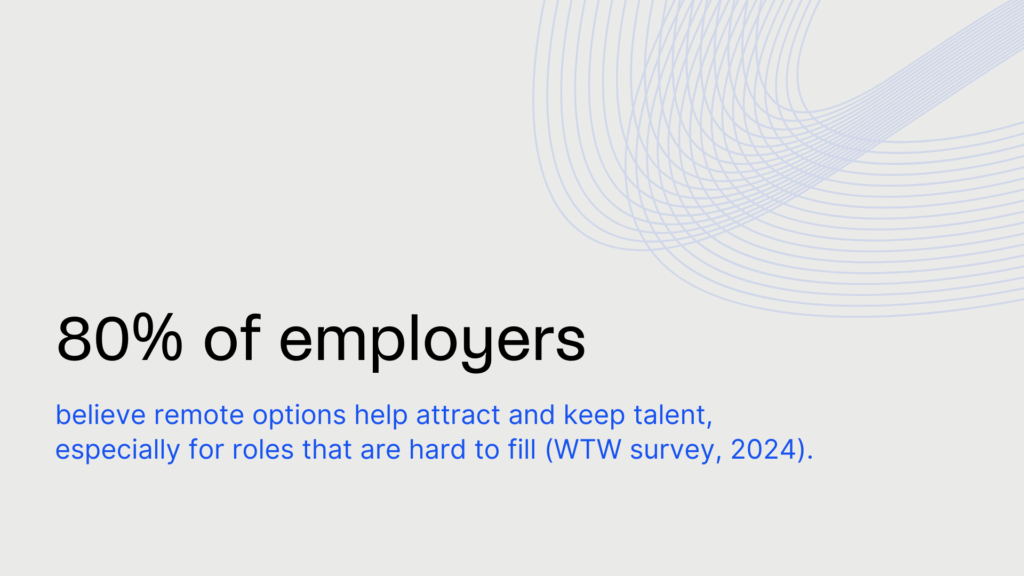
At the same time, companies do recognize the value of remote work — and rightly so. That same WTW survey found that more than 80% of employers believe remote options help attract and keep talent, especially for roles that are hard to fill. They also found that workspace flexibility helps employees balance their work and personal lives, which leads to better engagement and retention.
But not all motives are about teamwork. Unfortunately, some companies may be using RTO policies as a way to quietly reduce staff. A BambooHR study revealed that 1 in 4 executives (25%) and nearly 1 in 5 HR leaders (18%) admitted they were hoping some employees would quit when RTO policies were introduced. This kind of “quiet firing” allows companies to shrink their workforce without having to do formal layoffs.
Plus, some companies may also be pushing RTO to justify spending on office spaces or to help local businesses near their offices. With commercial real estate taking a hit in some cities, there’s pressure to show that these office spaces are still being used.
Others believe people might be more productive in the office — and more productivity usually means more profits. A 2024 study showed that companies in the S&P 500 were more likely to roll out RTO mandates after their stock prices dropped, hoping that bringing people back in would boost performance.
But does being in the office actually help? The research says… not really. There’s no solid proof that five-day office policies improve business performance, but there is strong evidence that they hurt employee satisfaction.
Which companies returned to the office in 2025?
The year opened with some of the biggest companies returning to the office. Amazon, AT&T, Walmart, JPMorgan Chase, and Dell all pushed large groups of employees back to full-time office or close to it.
Google reinforced its three-day model for teams that had been fully remote, and Electronic Arts started phasing out full remote in favor of a consistent three-day cadence, with long notice periods for people living far from an office. Public employers joined in: Minnesota’s state government set an “at least half-time” threshold on site, signaling that local and state agencies are also recalibrating after years of flexibility.
September 2025 was the inflection point. A cluster of large organizations — Intel, BNY Mellon, Royal Bank of Canada, Ford, Bank of Montreal, Toyota, 3M, and parts of Target — moved from the familiar two- or three-day hybrid to four days a week in the office.
In October, HSBC set a four-day in-office requirement for managing directors and signaled it may extend stricter rules to more staff. Starbucks moved corporate hubs in Seattle and Toronto to four defined days, complete with “common days” to get everyone aligned and a relocation requirement for people managers who live outside those cities. Samsung went further for parts of its U.S. semiconductor business, enforcing five days on site and rolling out attendance tools to curb “coffee badging.”
Not every organization flipped the switch in 2025. Several well-known names have announced 2026 timelines instead, giving themselves room to expand space, tune policies, and pace change with local labor markets. These longer runways suggest leaders are weighing real estate capacity, hiring markets, and the risk of turnover alongside cultural goals.
Across all of these examples, a few themes stand out:
- First, hybrid remains the default in 2025, but the center of gravity has shifted from two or three days to four for many large employers.
- Second, the companies that moved fastest often ran into practical challenges: think desk shortages, seating plans, and the simple math of fitting more people into the same footprint.
- Third, employee sentiment continues to hinge on the quality of in-office time. When a day in the office delivers hands-on learning, faster unblockers, and real collaboration, people tend to accept it more readily. When it feels like remote work done from a different chair, pushback grows.
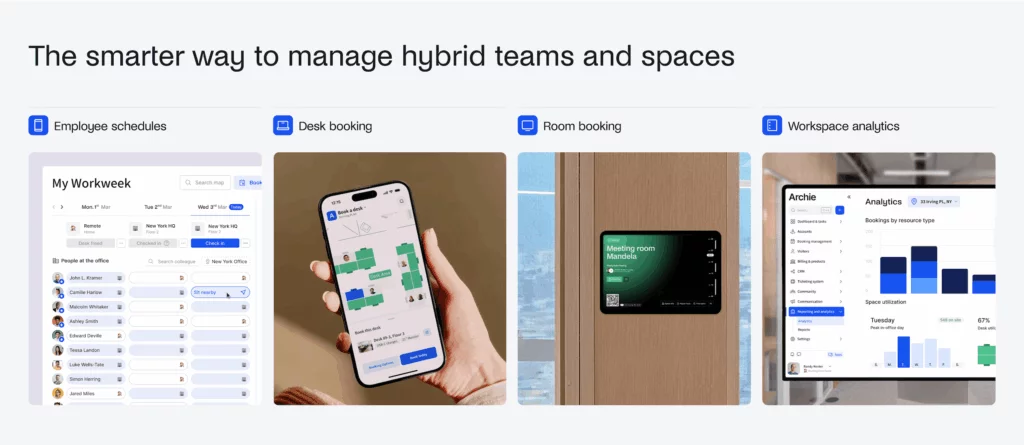
- Finally, the most durable rollouts have been phased, clearly explained, and supported by better hybrid office management tools and spaces, rather than driven only by policy memos.
Big office returns planned for 2026
Stricter rules are coming into play for many employees in 2026. More days in the office and more full-time returns is the general pattern for several large employers.
Full-time in-office policy
- From January 2026, a five-day-a-week onsite policy was implemented for Paramount Skydance’s LA and New York office employees. International and remote teams will soon follow. Staff who didn’t want to return were offered a voluntary buyout, which approximately 600 people took at a reported cost of $185 million.
- Truist also ended hybrid work entirely as January 5 – the last step in a gradual tightening that had already pushed investment banking teams to full-time earlier.
- Kroger followed the same playbook, requiring corporate and office employees back five days a week in 2026, a change the company tied to faster decision-making in support of round-the-clock store and distribution operations.
- Novo Nordisk’s office-based employees also became required to return full-time – this replaced the previous mix of remote, hybrid, and flexible setups that applied to different regions and teams.
- In February, Meta implemented this policy for US Instagram employees with assigned desks. This was a move from a previous three-day hybrid schedule (that still applies across Meta’s other divisions). Adam Mosseri framed the change as a way to make the team “more nimble and creative,” pairing it with fewer recurring meetings and more emphasis on building prototypes over slide decks
Four-day week office policy
- NBCUniversal has taken this path; hybrid employees moved to four days on-site (Monday through Thursday) starting January 5, 2026, with remote Fridays. A voluntary severance option was offered to those who preferred to leave.
Three-day week office policy
- Microsoft began this policy February 23, 2026 in the Puget Sound area. Other U.S. offices will soon follow suit, then internationally later in the year.
- EY moved its US tax staff to roughly three office days a month starting July 1.
- Patreon tightened its policy from two required days to three that same month, on the heels of a 20% workforce reduction.
💡 Follow Archie’s RTO tracker for the latest return-to-office announcements →
How do employees feel about RTO?
In short? A lot of employees aren’t thrilled about being asked to go back to the office full-time, and many are actively pushing back.
According to Gartner, nearly three-quarters of HR leaders say RTO mandates have caused tension inside their organizations. When companies like Amazon and Dell pushed for stricter office mandates, many workers began looking for new jobs. Some, especially senior leaders, left for competitors who offered more flexible options.
In 2026, Gallup reported that 6 in 10 remote-capable U.S. employees want a hybrid work arrangement; about one-third prefer fully remote; fewer than 10% prefer fully on-site.
Most employees prefer remote work
According to a BambooHR survey from mid-2024, more than half of full-time U.S. workers (52%) said they prefer to work remotely, while only 39% said they prefer being in the office. Research from Gartner also shows that remote workers often feel more included and productive than when they’re in the office full-time. In fact, most employees say they do their best work from home.
For most, it’s all about flexibility and work-life balance — less commuting, more time with family, and being able to manage their day better.
23% of working parents say flexibility to work from home when needed would be extremely/very helpful, versus 6% saying it is available at their workplace, according to the Pew Research Center.
Many would quit if forced back full-time
A Pew Research study found that 46% of remote-capable workers in the U.S. said they’d be unlikely to stay at their job if remote work ended, with 26% saying they’d be very unlikely to stick around.
29% of employees in SurveyMonkey’s 2026 compilation say they would look to leave their job if it became fully in-person.
Then, a Gartner survey found that 1 in 3 executives would consider quitting if forced back to the office full time. So this is something people at every level are thinking about.
People would even take a pay cut
That’s how important flexibility is — nearly half of hybrid and remote workers (48%) said they’d take an 8% pay cut to keep working from home.
The pressure to “look busy”
A BambooHR survey shows that many people feel the need to prove they’re working, whether working remotely or in the office.
- 88% of remote workers and 79% of in-office workers say they go out of their way to show they’re being productive.
- Many remote workers admit to keeping their status “green” on chat apps all day — even when they’re not working — just to seem active.
- In the office, people say they walk around or chat with others just to be seen by their boss.
This shows that trust is a big issue — workers feel they’re being judged more on visibility than actual results.
Caregivers and disabled workers depend on flexibility
The same survey proves that remote work isn’t just a perk — for some, it’s essential:
- 75% of parents and caregivers say flexibility helps them balance work and home life.
- And 63% of workers with disabilities prefer working remotely, with many saying they’d consider leaving if forced to return to the office.
There are some challenges, too
At the same time, hybrid and in-office teams are facing a new challenge: feeling disconnected from their remote coworkers.
Colleague engagement (77%) is the biggest reason people come into the office in 2026, according to CBRE. What keeps people away is more practical: an inconvenient location (62%) and a lack of amenities (53%).
While hybrid work has a lot of perks, it’s not perfect. One issue that’s come up is that some in-office and hybrid workers feel disconnected from teammates who work remotely. A BambooHR report found that over 40% of hybrid employees said they don’t feel as connected to coworkers who aren’t in the office much. If companies don’t find ways to bridge that gap, it can hurt teamwork and make people feel left out.
At JPMorgan Chase, returning to the office full-time has been tough for many employees. According to Fortune, workers have run into problems like not enough desks and meeting rooms, slow or unreliable Wi-Fi, and crowded offices.
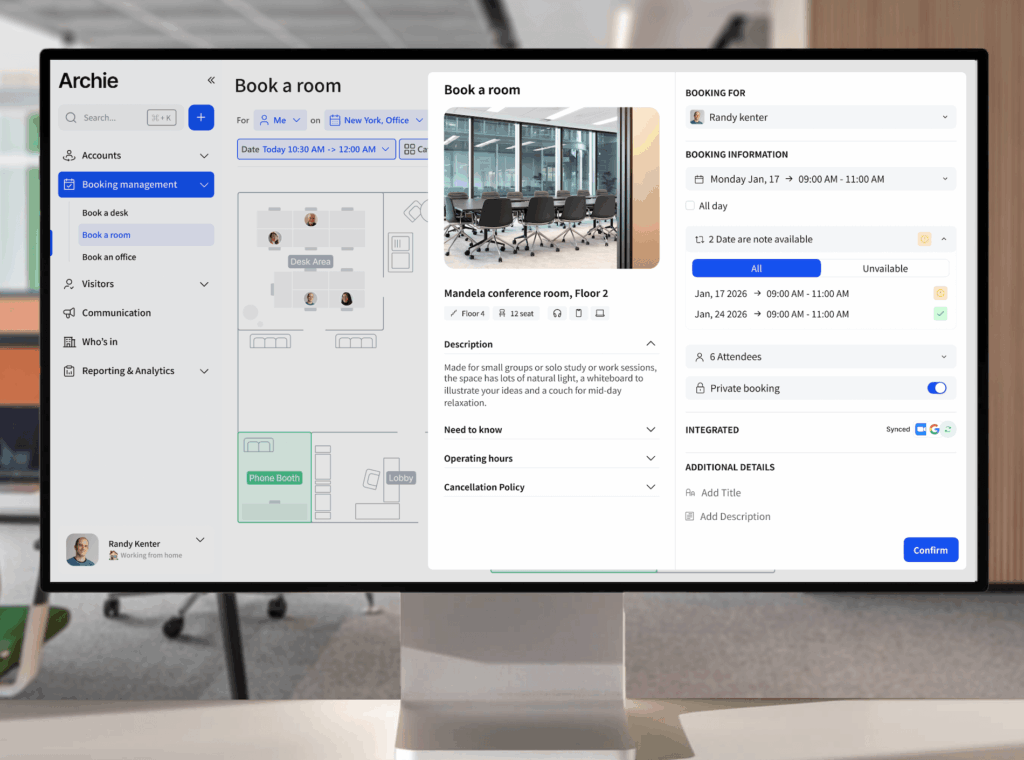
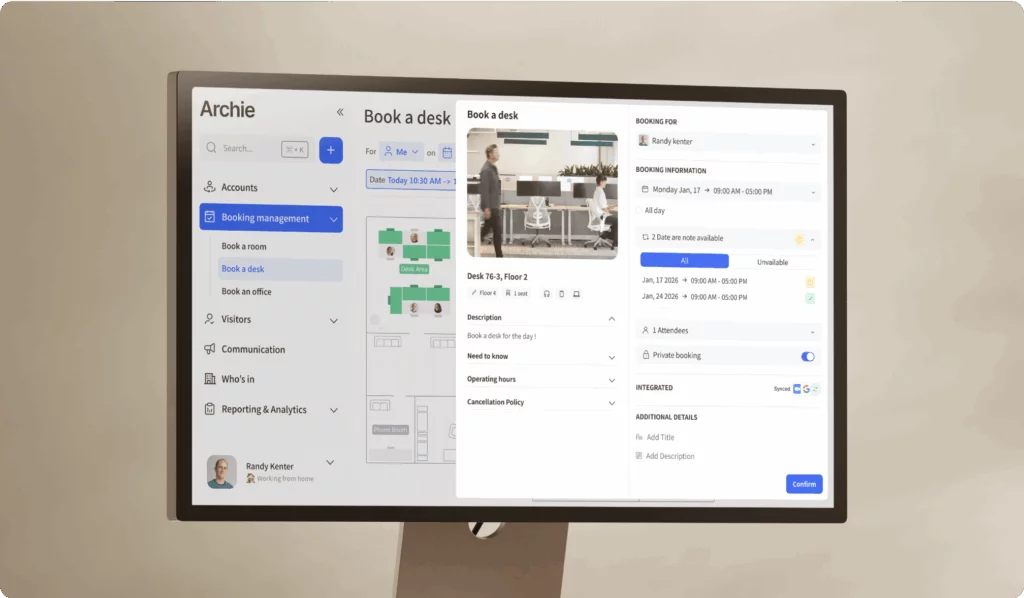
In fact, less than half of employers (47%) and employees (42%) globally feel that their office spaces are well-equipped to support the evolving needs of hybrid work. Some of these issues can be addressed with desk booking software like Archie, though.
The attendance gap is finally narrowing
According to CBRE, employers in the Americas have an average target of 3.2 days in the office in 2026, and employees are showing up about 2.9 days. Seventy-two percent of companies say they’re actually hitting their attendance goals, up from 61% last year, and more than a third still expect further gains. The biggest struggle is scale: very large companies report the widest gap between what they ask for and what they get, while small companies show almost no gap at all.
Eighty-five percent of companies now communicate an attendance policy, 69% measure compliance (up from 45% in 2024), and 37% are taking enforcement actions (up from 17%). That tougher stance helps explain why more firms feel they’re at “steady state.” Even so, the “hybrid dilemma” remains: offices are near capacity on peak days for 73% of companies, but only 34% say they’re at capacity on an average day. In fact, two-thirds report their space is under 60% utilized on a typical day, which hurts energy and culture mid-week.
Seating strategies keep shifting to combat desk shortages
Assigned seating is falling fast (only 25% rely on it today, down from 40% in 2024 and 56% in 2023) because part-time attendance makes 1:1 seats wasteful. Desk sharing is the norm and getting bolder: by 2027, 73% expect people-to-desk ratios above 1.5:1.
Flex space also remains part of the toolkit. Most firms still keep it under a quarter of the portfolio, but they’re growing usage to reduce capex, hedge uncertain demand, and give teams on-demand meeting space. Small companies lean into flex to give employees more choice; large companies use it more as a financial and capacity lever.
Is return to office worth it?
Return to office is worth it… Sometimes. Being in the office can build energy, help with collaboration, and make some tasks easier. But when companies force it, without listening to what employees want or need, it often backfires.
According to the ResumeBuilder survey, 8 in 10 companies admitted to losing talent because of their RTO policies. Another survey from ZipRecruiter found that businesses with tough RTO policies had turnover rates about 13% higher than those with more flexible setups (169% vs. 149%). And companies with strict mandates were twice as likely to say their turnover had gone up in the past year.
Some employees simply aren’t willing to move back near the office or give up the flexibility they’ve grown used to. Others have family or health needs that make remote work a better fit. In fact, companies that offer remote or hybrid work tend to retain more talent. According to ZipRecruiter, employers that expanded remote options were more likely to be growing and hiring.
The best results come from a flexible and thoughtful approach, not rigid rules. People want to feel like they have a say — and that their time in the office actually matters.
In fact, 41% of workers say they’d be more willing to return to the office if it came with higher pay. Other things that make office life more appealing include a shorter commute (28%), no dress code (23%), and better technology (18%).
So instead of forcing people back, companies should consider:
- Involving employees in setting hybrid schedules
- Explaining why office time is important (like for team projects or collaboration)
- Using office time wisely — for brainstorms, planning sessions, or social events
- Investing in hybrid office tools to make things easier
Beyond internal planning, enriched data can also support business growth. For instance, combining workspace analytics with CRM enrichment helps companies build fuller profiles of their prospects and customers. That way, the same insights that make hybrid policies more effective can also power more personalized outreach and lead generation.
The issue is: With 87% of workers now saying that great technology is essential to their job (up from 83% in 2023), choosing the right tools is more important than ever.
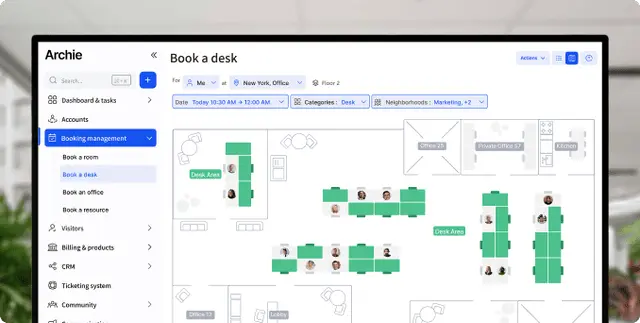
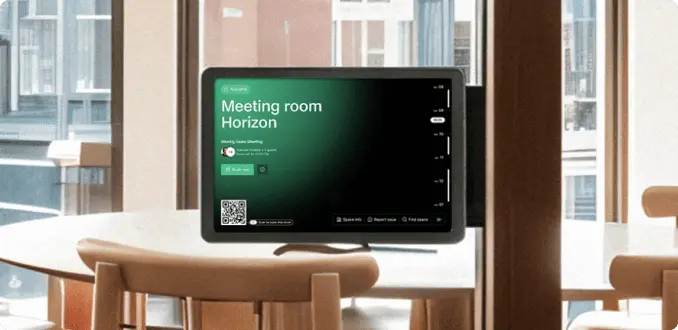
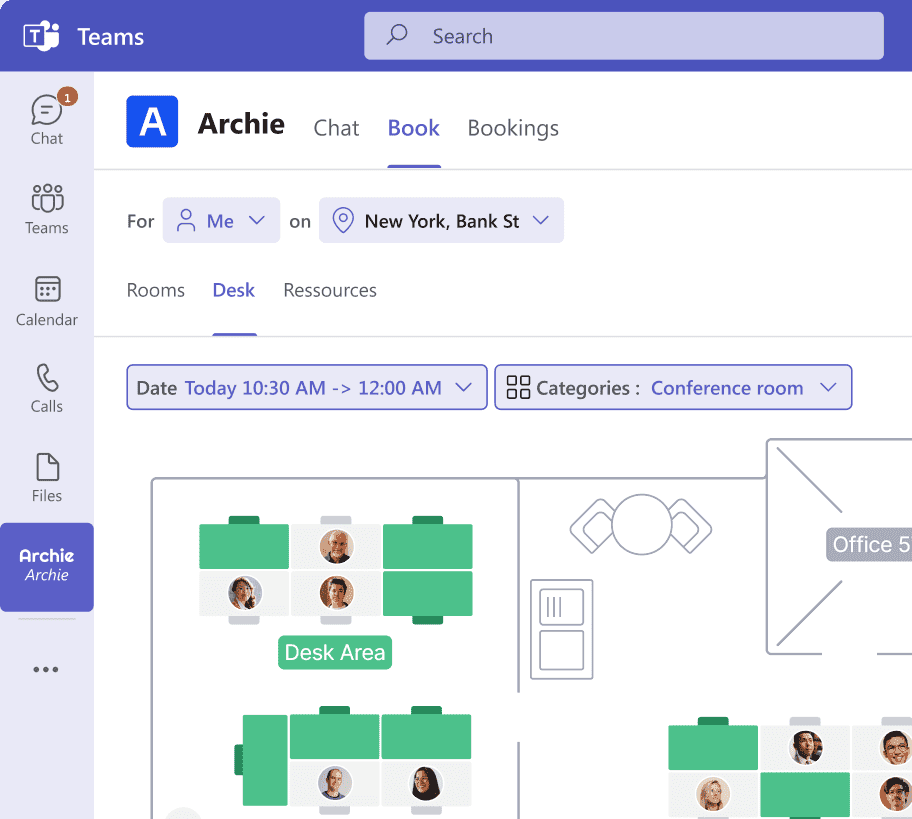
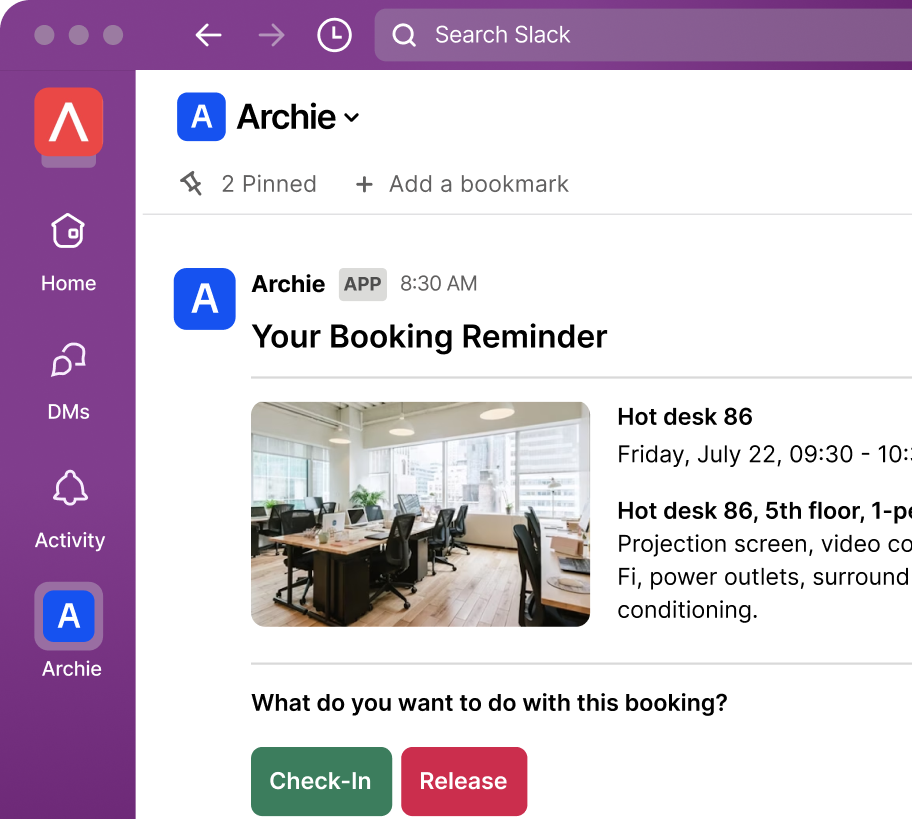
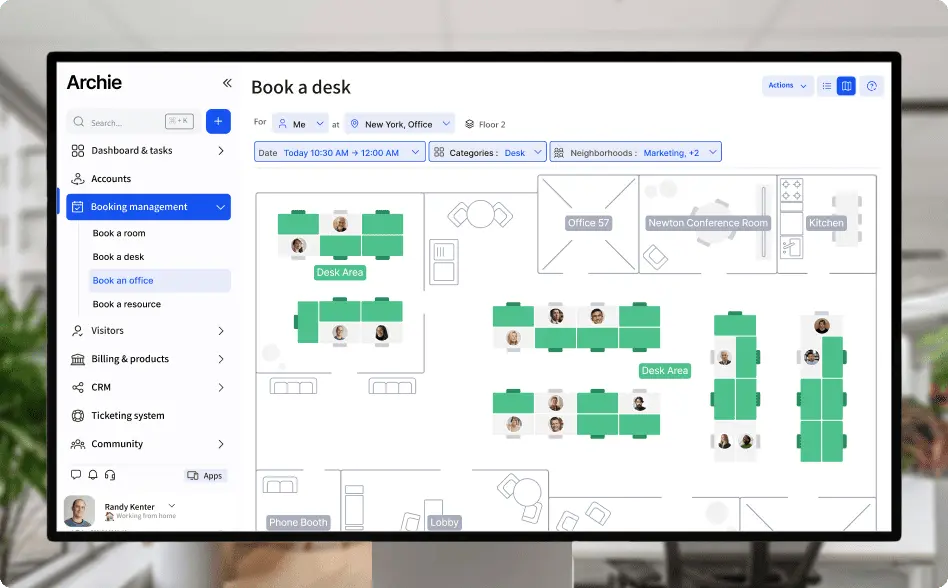
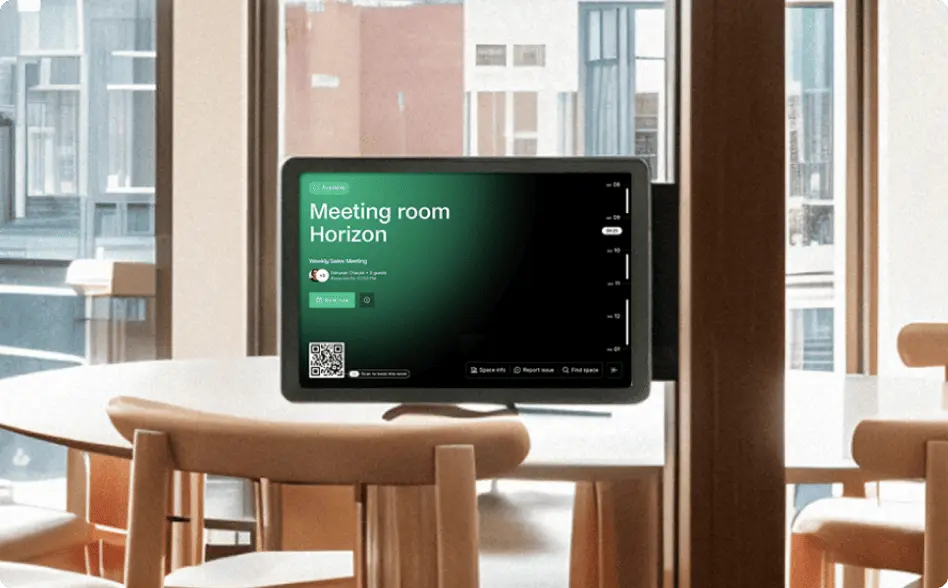
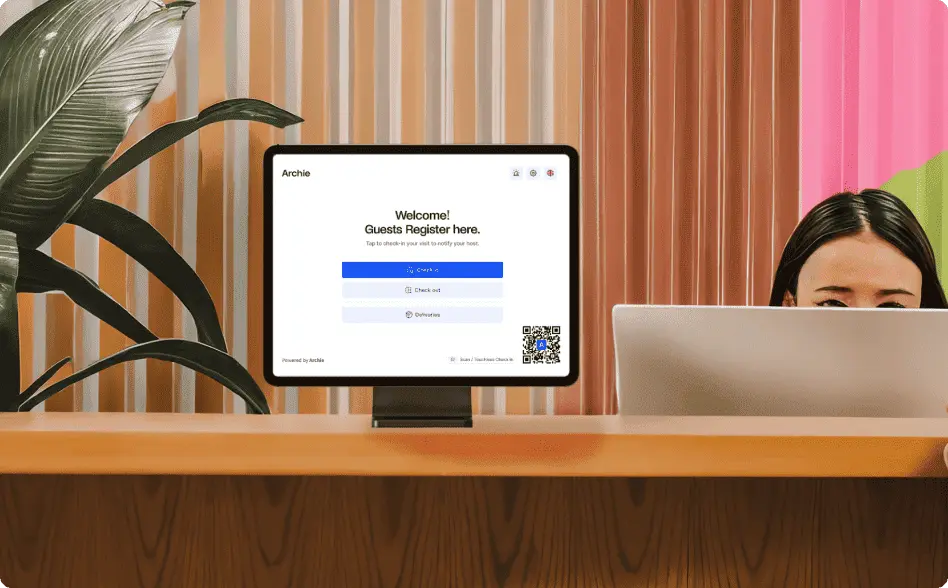
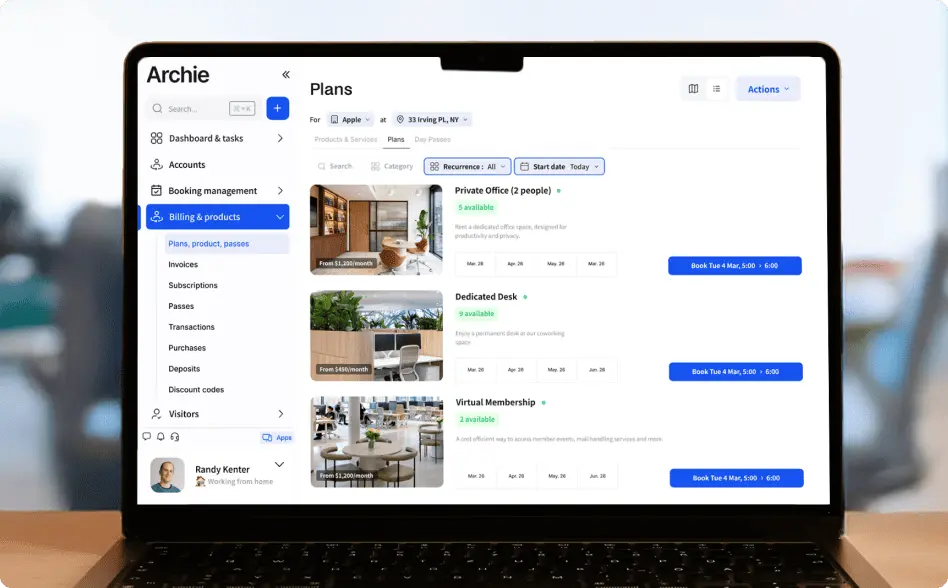
If your company runs on a hybrid work model, Archie is the all-in-one tool you need to keep your office running smoothly. It helps employees book desks, reserve meeting rooms, check in visitors, and track office usage — all in one place.
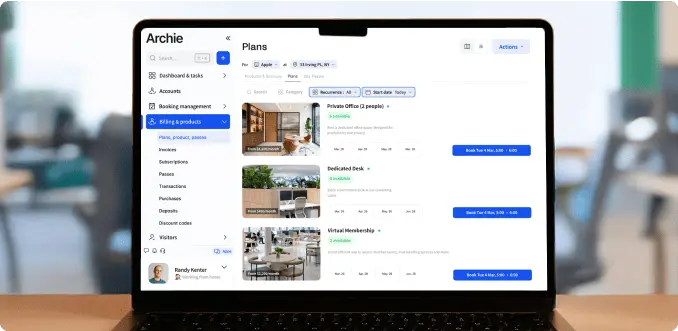
Unlike other tools that charge per user, Archie charges per resource, like desks or meeting rooms. That makes it perfect for flexible teams where you might have more employees than office space. You only pay for what you use.
A summary of the most recent RTO statistics
🔄 Return-to-office stats on trends & policies
- 89% of employers require at least 3 days in the office per week in 2026, up from 78% in 2025 (CBRE, 2026).
- Only 11% of employers expect 1–2 office days per week in 2026, down from 23% in 2025 (CBRE, 2026).
- Average office attendance is 2.9 days/week versus an average employer target of 3.2 days/week (CBRE, 2026).
- 80% of organizations have hybrid programs in 2026, up from 77% in 2025 but below 87% in 2024 (JLL, 2026).
- 62% of organizations require a fixed number of in-office days in 2026, up from 49% in 2024 and 2025 (JLL, 2026).
- Fully flexible hybrid approaches fell to 14% in 2026, from 15% in 2025 and 40% in 2022 (JLL, 2026).
- 72% say they’re meeting attendance goals (up from 61% last year). More than 1/3 expect further attendance gains (CBRE, 2025).
- 85% have a communicated attendance policy (CBRE, 2025).
- 69% measure compliance, up from 45% in 2024 (CBRE, 2025).
- 37% take enforcement actions, up from 17% in 2024 (CBRE, 2025).
- Fewer than 5% of companies require employees to be in the office 5 days a week (WTW, 2024).
- Three days per week is the most common in-office requirement (WTW, 2024).
- Over 50% of companies let employees choose which days they come in (WTW, 2024).
- 43% of U.S. companies had set office schedules by late 2024 — up from 20% in early 2023 (Flex Index, 2024).
- 50% of companies require employees to be in the office 4 or 5 days a week (ResumeBuilder, 2024).
- 70% plan to maintain or increase office days in 2025 (ResumeBuilder, 2024).
- 93% of business leaders believe employees should be in the office at least part-time (ResumeBuilder, 2024).
- Over two-thirds of companies globally now have formal RTO policies requiring some in-office time (WTW, 2024).
🌍 Regional differences in office attendance
- 52% of U.S. employees in remote-capable jobs are hybrid; 26% are exclusively remote and 22% are fully on-site (Gallup, 2026).
- Europe: ~55–65% (WTW, 2024).
- Asia (e.g., Hong Kong, Tokyo): ~85–90% (WTW, 2024).
👔 Why companies want RTO
- 76% of leaders say face-to-face work boosts engagement (WTW, 2024).
- 71% say it strengthens company culture (WTW, 2024).
- 63% say it improves productivity (WTW, 2024).
- Over 80% say remote work helps attract and retain talent (WTW, 2024).
💼 Employee feelings about RTO
- 6 in 10 remote-capable U.S. employees want a hybrid work arrangement; about one-third prefer fully remote; fewer than 10% prefer fully on-site (Gallup, 2026).
- 29% of employees in SurveyMonkey’s 2026 compilation say they would look to leave their job if it became fully in-person (SurveyMonkey, 2026).
- 77% of employees say engaging with other colleagues is a factor driving their office attendance (CBRE, 2026).
- Only 44% of workers said they’d comply with a 5-day RTO policy (WFH Research, 2024).
- 14% said they’d quit (WFH Research, 2024).
- 52% of full-time U.S. workers prefer remote work (BambooHR, 2024),
- Only 39% prefer the office (BambooHR, 2024).
- 46% of remote-capable workers say they’d likely leave their job if remote work ended (Pew Research, 2024–25).
- 26% say they’d be very unlikely to stay (Pew Research, 2024–25).
- 53% of remote workers would look for a new job if forced back full-time (WTW, 2024).
- 1 in 3 executives would consider quitting if forced back full-time (Gartner, 2024).
🧠 RTO stats on employee behaviors & challenges
- 88% of remote workers and 79% of in-office workers feel they need to prove they’re being productive (BambooHR, 2024).
- 64% of remote workers keep their chat app status green, even when not working (BambooHR, 2024).
- 75% of caregivers say flexibility helps them manage work and home (BambooHR, 2024).
- 63% of workers with disabilities prefer working remotely (BambooHR, 2024).
- 42% of workers with disabilities would consider leaving if forced back (BambooHR, 2024).
- Over 40% of hybrid employees feel disconnected from fully remote teammates (BambooHR, 2024).
- On peak days, 73% say offices are at/near capacity (CBRE, 2025).
🏢 Office setup challenges
- Assigned seating used by 25% of companies today, down from 40% in 2024 and 56% in 2023 (CBRE, 2025).
- By 2027, 73% expect people-to-desk ratios >1.5:1 (CBRE, 2025).
- Only 47% of employers and 42% of employees feel their office is equipped to support hybrid work needs (BambooHR, 2024).
- 8 in 10 companies admitted they lost talent due to RTO mandates (ResumeBuilder, 2024).
- Companies with strict RTO had 13% higher turnover (169% vs. 149%) (ZipRecruiter, 2024).
- Companies with strict RTO were twice as likely to say turnover had increased (ZipRecruiter, 2024).
- 41% of employees said higher pay would make them more open to returning to the office (Owl Labs, 2024).
- Other top reasons to return: 28%: shorter commute, 23%: no dress code, 18%: better technology (Owl Labs, 2024).
- 87% of workers say great technology is essential to their job (Owl Labs, 2024).
- Key sources